

Leading, Part II

As we continue to inculcate the qualities establishing our leadership both within the workplace and within the community, I want build on enthusiasm and optimism. These magnetic qualities only work for us when we use them to work on things that matter. You know that work is not a dirty word. Unlike Maynard in the old Dobie Gillis sitcom, your work ethic has been reflected in your success. It has brought you to where you are today—but is this where you want to remain? To take your success to the next level you need to laser your focus and intensify your efforts.
The first aspect leads you to crystallizing your efforts. Evaluate your business in light of this new pandemic world with an eye for detail. Little things make all the difference. McDonalds is credited with success because founder Ray Kroch started schools for making hamburgers, teaching employees to get the “itty-bitty-teeny-tiny things right.” That’s why you can go to a McDonald’s anywhere in the US, order a Quarter Pounder and know exactly what you’re getting. An eye for detail makes all the difference between a ho-hum presentation and a shopping memory. You are in the business of making memories. Take the time to create memories for a lifetime of success.
Once you’ve determined your course, accept responsibility for getting there. Harry Truman was famous for a desktop ornament, “The buck stops here.” You must take responsibility for not just for implementing your vision, but also for the welfare and morale of everyone working with you. Wesaw that clearly through the pandemic, as business leaders thought of creative ways to retain their workforce and inspire their loyalty. You know from first hand experience that it involves stress and mental strain. It takes long hours. It’s up to you to follow through, making sure the job is ultimately done and done right. Helen Keller said, “I long to accomplish a great and noble task, but it is my chief duty to accomplish small tasks as if they were great and noble.” As you demonstrate that mindset, whether you are emptying the trash or cleaning the whiteboard, you are quietly inculcating the quality in your workforce. Successful leaders accept responsibility for the lowliest tasks upon occasion, and that is exactly why their people will follow them to the ends of the earth.
The third quality parallels both these and is embraced in a simple sentence: Losers give 100%. A committed leader gives 110%. Yes, commitment means you lead with an eye on the delicate crucible of being visible, while at the same time letting your workers enjoy the success of the most enjoyable projects. You are just one person and you cannot do it all, so delegating is important—but do the job no one else wants and let the glorifying project belong to someone else.
In the demanding equation that brings all the parts together, it’s not enough just to do your best and shrug off little failures. You must demonstrate a slavish dedication to a well-defined goal. Look closely at any successful program or business, and you’ll see an almost maniacal leader in hot pursuit of a goal only he/she strives to reach out and touch. Look at Edison in April of 1872. He was working day and night to find a way to permit simultaneous two-way transmission on a wire. He was suffering from exhaustion and ready to give up. Twenty-two days later he found the solution. Had he quit at the natural breaking point, someone else would have enjoyed his success. He is quoted as later saying, “Many of life’s failures are people who did not realize how close they were to success when they gave up."
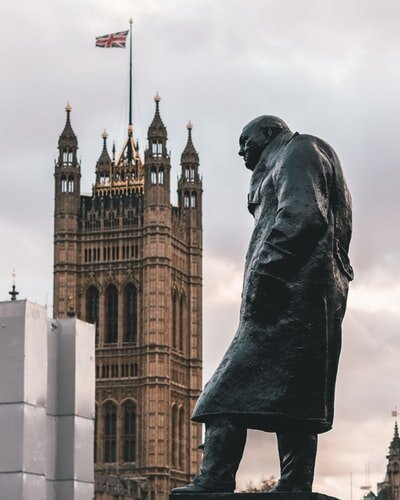
Few people realize that Winston Churchill grew up with a lisp that precluded attending any university. Doctors advised him against entering any profession in which speaking was important. Years later his voice breathed hope into a frightened, discouraged nation bombarded every night during the blitz, on the verge of defeat by Hitler. He was their Prime Minister, but more importantly, he was their cheerleader. Had he not held out, America would have fought Hitler alone and very likely, lost. The fate of the free world was determined by the inspired commitment of one man in his darkest hour. Commitment. Did he do it alone? Of course not. Famous generals, the Queen of England and the patriotism of a nation kept Britain intact, but it was his unswerving commitment which formed the unifying basis of great and glorious deeds.
Nothing takes the place of commitment. Nothing is more common than unsuccessful artists with great talent. Certainly not genius, with some inborn ability to memorize or learn by leaps and bounds. The world is full of smart derelicts. Unswerving commitment, accepting responsibility and making the glorious idea come alive is the hallmark of leadership.